Coping with Technology Rage

What is it about operating new or slow software that can leave us so frazzled?!  As I started with a whole new set of processes and organization system and new computer hardware and software, new calendar syncing and internet access issues I ended my day yesterday with tightened muscles and a short fuse. I had a long list of things I wanted to complete and my computer was not cooperating.  I felt irritated, helpless, annoyed, technology handicapped and frustrated for not getting everything accomplished on the timetable I had in mind.

Wait! I have been there before! As I reflect back on my first days of every new job, I can recall tensing up over technology every time! Every memory, in the beginning, includes me losing patience with not learning the technology as fast as I would like. Blaming it for not allowing me to be as speedy and productive as I had in mind for the time I allotted. The more tension I built up each time, the worse I struggled to figure it out.

What is this all about? No matter how much faster the software is today compared to 30 years ago or how much faster the speed of the internet is compared to dial-up, I still get worked up that it isn’t fast enough. What an aha moment! It isn’t the technology that has the problem. It is me!  Can you identify with me?

I am typically someone who forgets to come up for air. I start down my to-do list like a blazing train that doesn’t have any brakes and then suddenly combust because the engine wants to shut down. I drive myself harder and harder to a point of wanting to beat it up for not doing what I want it to do. I need help.  Does this sound like you too?

If you have found yourself in similar situations go through some self-coaching questions (Based on InsideOut Coaching and counseling lessons):

-What issue do you want to work through?

-What is your SMART Goal:

(Specific, Measurable, Aligned, Realistic, Time Phase)

– What are the consequences if you don’t take action?

Reality

– What’s been happening?

-What have you tried before?

-What were the results?

-What are your roadblocks?

-Is your goal attainable?

Options

-If a friend were experiencing this, what would you advise?

Next Steps

– How can you put a plan in place to ensure you don’t end up here again?

As an example of how to answer these main questions, my goal is to not allow myself to get all worked up and tense and destroy my own peace and productivity due to things out of my control. I want to keep my joy. If I don’t do something about this I could damage my relationships and work productivity.

In my reality, I have kept doing the same thing and tried harder and harder without taking a step back. I stop breathing and allowed tension to grow. By the time I call support, I have already lost my patience and start my deep breathing after someone else is involved.

To answer the question on whether or not my goal is attainable, I do see it is realistic given technology support people can maintain calmness and they deal with technology frustrations all day long.

If I were coaching a friend or family member through this problem I would say:

– Ask yourself, do you have time to take a break from this? Hit the pause button and do any of the following:

-Some deep relaxing breaths.

-Go to lunch away from your desk

-Take a quick walk

-Switch to a different task

All the above can give you time to refresh your mind and relax your muscles.

Like you would a friend, tell yourself:

-Stop pushing yourself so hard.

-Schedule in time for breaks throughout the day so you don’t burn out.

-Lighten your daily to-do list.

-It is okay to call for help before losing your patience.

-Stop your negative thinking by pausing to look at the big picture and read some positive messages to give yourself a better attitude to relieve some tension.

-Learn to laugh at yourself and the situation.

For so many of us, technology is hard to understand and therefore it puts us over the edge because we can’t control how it malfunctions. We also can’t try to influence our devices. All we can do is look at how we handle ourselves and manage our reactions as well as the habits that lead up to our tensions and explosions.

Go through the series of questions above when you find yourself facing a roadblock. This exercise can help you see solutions you weren’t originally able to see.

For me, this series of questions made me approach my next day differently.  By scheduling in breaks for breathers and stretching and making my daily to-do lists more realistic, I ended up accomplishing much more. It also helped to take time for lunch away from my desk. Everything went smoother!

When you hit a problem that starts to frustrate you, divert your attention to something easier that reduces tension for a short time. Then revert back to calling for help with the problem after you have tried again with a more relaxed mental state and where your muscles aren’t all tight.

We can choose to allow technology to help us become more efficient or let it take control of our lives. It is up to us to choose how we respond.

If you have other helpful tips to not letting technology take away your peace, please share.

 

Create an Exercise Streak

“You Need To Create Your Energy!” Rachel Hollis

“I need to start exercising.”  How many times have you said that to yourself?  For me, even though I did my daily yoga stretches in the dark on my bedroom floor in the morning while waking up, I had a hard time getting motivated for cardio.  Walking the dog when the weather is nice is also easy.  However, in the winter when that alarm goes off and you are all snug in your bed the self-talk you gave yourself that night before does not seem to talk as loud as the voice in the cold winter morning that says, “I am comfy and warm and don’t want to get up.  Hit snooze and fit it in later.”  That becomes the never-ending cycle.

Then you have a wake-up call.  You hear of a friend at 45 that had a heart attack.  Or suddenly you have put on extra pounds that make you have to buy a new wardrobe, or you find yourself in physical therapy after hurting yourself given you were not so physically fit.

If you are one of those people like me, I highly recommend finding an accountability group.  A friend of mine started a private Facebook group called “Streakers” and each day you do at least 20 minutes of exercise and post it to the private group page.  That small change in accountability makes a huge difference.  You also realize how you can make time to get in at least 20 minutes to work on that heart rate.  Also, I would highly recommend listening to a podcast at the same time as it makes the exercise go by quickly and you end up feeling proud of yourself and learn something at the same time.

You also realize that when you are being held accountable, no matter what roadblocks you have like traveling or family demands on you, you make getting it in a priority rather than developing excuses.  I’ve had days where my attitude needed an adjustment and I felt unmotivated for anything.  Still, because I didn’t want to be that person who quit, I got in my 20 minutes.  It cured any depression and totally turned around my attitude.  When you stop letting yourself down, it becomes a confidence booster too.

Some of you may be thinking, only 20 minutes?  Is that enough?  This article is not for those who are training for marathons, taking two cycling classes a day or just love to workout.  We all admire our friends who get up at 5AM or 5:30AM and have strong workout regimens.  Don’t compare yourself to those friends and let yourself feel bad for not measuring up.  Let them be your inspiration for the purpose of the exercise.  You may notice they always seem to have great energy and enthusiasm for life and seem filled with joy every time you see them.   This article is for those who may be suffering from winter depression, love the outdoor activities in the summer and hibernate in the winter.  Sometimes we need to take baby steps towards our goals.  Once you get in the 20 minutes and feel how it is easy to get that in and start feeling better about yourself, then you can progress and set higher goals from there.

Find some friends and go streaking!

Special note: Please see your Doctor before starting an exercise program.


Photograph taken Downtown Cincinnati, Ohio

Find Freedom from Controlling Behaviors

It was August of 1997.  I was 24 years old, extremely motivated, and trying to make a living in sales. A business client had called for an appointment and gave me an address regarding where to meet. When I arrived, I said to myself, “This can’t be right.” The address is a house. I called the number again.  The client verified that was the meeting place. According to my notes, there were supposed to be multiple people in this meeting. Again, I said to myself, “Why aren’t there any cars? This doesn’t feel right.”  Convincing myself that I needed the business, I went to the door anyway.

I knocked on the door and the client answered.  I felt somewhat relieved that he answered the door.  I knew him. He had gotten married recently and was very happy when I worked with him a year ago. We had made small talk waiting on the other people to arrive.  He recognized my discomfort due to his shaven head and twitching face. He shared he was diagnosed with a brain tumor and it was very serious.

As time started to lapse, I looked at the clock.  My fiance was going to start wondering where I was.  I had grown even more uncomfortable as time passed.  I wondered how much longer it would take for the others to arrive.  After declining his offer for a glass of water, he asked if I wanted to see the blueprints for the business. Again, I ignored my instincts.  I entered the room to look at the architect table. There was nothing on the table. When I turned to look at the client, he was holding a revolver.

Rather than listening to myself, I ignored my inner voice. As he said “I am not going to kill you or rape you” I turned my head to see the revolver pointed at me. Instantly, I went into hysterics. He closed the door and moved me towards the back of the room.

“Take your clothes off.” He said.

I immediately envisioned myself taking off my clothes and that not being enough for him. I saw images of him asking me to do things I did not want to do and him eventually taking my life. I saw my dead naked body lying on the floor, and my loved ones finding out I was found lifeless and without my clothes in some strange house. I felt if he wanted all that he would have to take my clothes off after I was no longer alive. I said to myself, “My life is not ending this way. I have so many more dreams to fulfill.”

Somehow, I found the power within and decided to reason and plead with him. “Why are you doing this? What about your wife? I am not going to… You can kill me first.”

He replied, “I will cripple you.”

I said, “I don’t care if you kill me or cripple me.”

As he started to explain himself, “It is just that this tumor…” Right then, his twitches in his face and clicks of his head that I had witnessed earlier came back. I continued to plea and refuse to give in to his demands. I noticed that I was emotionally getting to him.

Suddenly, he turned the gun on himself.  While frightened he would take his own life in front of me, I saw my window of opportunity to escape.  Quickly, I went towards him as he backed himself up towards the door.  I grabbed the doorknob with my left hand and was able to wedge it open enough to get my leg in through the opening. Meanwhile, I pushed my right hand towards his face in an attempt to move the gun away from his own mouth. Somehow I was able to get out, grab my bag and keys and run out the door to my car while my whole body was shaking. He did not follow me.  I began driving and frantically called 911. They directed me towards a local fire department for safety. I repeated the story multiple times of how I ended up in that house.

In the end, after police had surrounded his house and tried to get him to come out for hours, he ended his own life that night.

I had made multiple very risky decisions that day.  I was thankful to be alive. I questioned myself. I worried about what people would think.  I thought, “Why was I so gullible? Why did he pick me?  Was there something I did that made me seem vulnerable?” I could never even face his wife to see how she handled all of it. I felt sad for her and envisioned him being sorry for what he had done to me. Truth is, I will never really know why or fully understand. Why would anyone choose to sabotage someone else’s life?

Often times, people attempt to control others when they feel powerless in their own lives.  The more we feel we have lost control, the more we want to try and control others.

After talking to my sister-in-law who is well versed in mental health, she helped me understand it was not my fault.  Being able to talk with someone helped me be able to focus on what could come from the experience. She helped me understand that some brain tumors cause irrational behavior. It was not about me. I was proud of how I had been brave enough to escape. I also learned that I need to listen to my gut instincts.

When sharing my story, some questioned why I didn’t just do what he said. You may even be questioning some of the same things and wonder why I am sharing this story.

While I was not a victim of rape, I felt the extreme case of having someone try to control me by force at a relatively young age.  I felt the side effects. My purpose is not to gain pity here. My purpose is to increase awareness and help you prevent being controlled. To teach you how to stop your own ineffective habits of controlling behaviors.    There are some lessons to be learned from this story, and others I have experienced in my life as both the victim and the controller.

Through professional help and research, I have learned how to identify signs of controlling behavior,  the reasons behind it, how to overcome situations of being controlled and recognize when I am the person doing the controlling.

Identify Situations of Controlling Behavior

Understanding Control and Abuse

How to Escape Controlling Behavior

Help for The Controller

What do you do when someone doesn’t do what you want? What style do you use with your children? Your spouse? Your employees? If you notice you are controlling as defined above, seek counseling if necessary. Uncover why you feel you need to have power over people.

If you are a manager that struggles with not being able to get their employees to do what is needed, don’t fall back on using forceful, threatening or demeaning remarks. It has negative effects on the person’s morale and kills the person’s desire to want to work for you.  While it is important to hold people accountable, it is ineffective in the long run to add demeaning comments that take a strike at the person’s worth. Rather than saying “you are lazy” a more constructive way of motivating someone would be to say, “You are not showing your full potential.  You are capable of so much more.”

For those in leadership, are you keeping an eye on how your managers treat those working for you?  What about how they treat your business partner representatives?  How they treat people is a reflection of your company’s image and could be costly to your business in turnover, your reputation with customers and maybe even lawsuits.  Be sure to have your employees do anonymous surveys.  Have someone secret shop, play vendor or play undercover boss for the day if you suspect anyone who could threaten your company’s values.

Whether you are the controller or being controlled, help is available.  You are worthy of so much more.  No one deserves to be treated as beneath another person.  You deserve to be treated with respect.  Be sure to look yourself in the mirror and reassure yourself of all your incredible traits.  Make a list of all your great qualities to reframe your mind and maintain your boundaries.  You have the right to have your own value system and maintain your self-worth.  Be brave enough to address the problem.  If safety is a concern, find support. Find freedom from this controlling behavior.

Other resources:

For more help with a controlling partner, I recommend Dr. Bonier’s blog: https://www.psychologytoday.com/us/blog/friendship-20/201506/20-signs-your-partner-is-controlling

https://www.psychologytoday.com/us/blog/communication-success/201409/how-successfully-handle-aggressive-and-controlling-people

For more help handling Aggressive and Controlling people see Preston’s blog: https://www.psychologytoday.com/us/blog/communication-success/201409/how-successfully-handle-aggressive-and-controlling-people:

Southbrook counseling – https://southbrook.org/ministries/

Boundaries By Dr. Henry Cloud & Dr. John Townsend

Www.ndvh.org

If you are a victim of Sexual Violence or Trauma, please seek your local counseling services.

Disclaimer: I am not an expert in the best way to handle yourself in a sexual assault situation or when someone is threatening your life.  Please see http://www.rainn.org or NSVRC. or http://www.cdc.gov

National Domestic Violence Hotline and Avon Partner with Suze Orman to Shed Light on Financial Abuse in Special Video Series “Women Breaking Free: Stories of Strength from Survivors of Domestic Violence”

Suicide Hotline: 1-800-273-8255

Crisis text: 741741

If you live in the Dayton, Ohio area, schedule free counseling by email: counseling@southbrook.org

To share inspiring stories or be referred to a Professional Counselor email: everythingforthesoul@gmail.com


Create Something #FindJoy

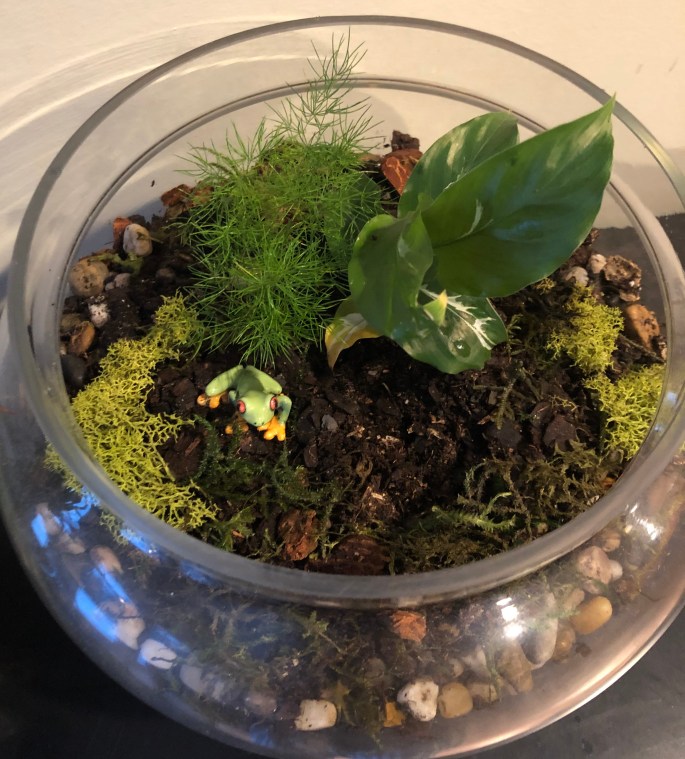
It is amazing how alive you feel when you do something new or create something. Especially when it is close to your passion. Whether it is painting, crafting, wood burning, wood carving, poetry, songwriting, making a terrarium, renovating or making furniture or using a pottery wheel it doesn’t have to be perfect. Let yourself feel the joy of the activity and your feeling of being immersed. What have you always wanted to create? There are unlimited options to be found on YouTube, at an art center or a workshop event near you. Start now and help fulfill your soul!

The joy is in the creation.

List ideas of what you have always wanted to create in the comments section.

Also see Gifts of Sunshine.


Identify What Stops You

It was the Fall of my Senior year of high school when I heard someone tell me a friend of mine’s parent had described me as “backward.”  BACKWARD?! I had felt the rage inside of me develop out of the piercing aching feeling that deflated me and question how I saw myself.  I quickly became defensive and said, “How could she say I was backward?!  I would say quiet but NOT BACKWARD.”  That sounded to me like awkward and that was NOT how I wanted to be defined.

Now as I type this, it sounds so ridiculous.  Why did I let one word spoken by someone who barely knew me to be my blockade and resurface as my inner critical voice for so long? Had I been strong enough in myself to not believe it, I would have brushed it off and explained it as their problem, not mine.  So it didn’t start there.  It started earlier in Junior High.

Junior High was a time in my life where our class size quadrupled. Also, it seems everyone spoke bad about other people and I was over-concerned with being judged. It took a lot to feel safe with someone in order to share my thoughts. Due to my silence in groups, I became labeled “quiet” in a way that seemed like a bad thing.

Recently while reading “Shining Freely” by Josie Muterspaw,  I realized  I need to “let go” of these labels that have been stuck in my head.

She says:

“The truth is, what you don’t let go of won’t let go of you.”

“We kill our joy, our destiny, our freedom, and our passion when we chew on the things we were meant to let go of.”

“Our emotional experience can be clouded by past hurts and then the fear guides our perspective instead of truth. ”

She talks about how decades can go by where we are stuck in those old hurts.

I recognize how I have been running away from that person in high school and have been overly driven to prove all those people wrong about me.

I went off to a college where no one knew me so I could start over. Throughout my journey for redefining who I was, I held onto the security of family members who saw something in me as a child. Teachers who saw I was smarter then I thought.  Professors who taught me listening was a strength that could be used for sales to make money.  Leaders who shared their struggles of timidness and inspired me to see the person who I could become.  I had a mentor who coached me out of my comfort zone and helped me discover how I could be brave and a high performer in sales and management.  They all helped get me to believe in myself and enabled me to accomplish what I sought to accomplish.

While that ambition and inner motivation have helped me overcome a majority of the insecurities, I let the list of accomplishments take over and be my source of where I found value in myself.  Rather than confronting the source of the pain, I have used it as a driver. Yet while running from who I was, I lost sight of the beauty within my own unique purpose.

Over the past couple of years, I started to hear things that moved something in me.    I wanted others fighting the same battle NOT to feel the same self abuse.

It wasn’t until I started my spiritual journey at Southbrook Church and got certified in Pastoral Counseling where I gained a deeper understanding of myself and how many successful others struggled with negative self-talk and feelings of inadequacy.  I have become more aware of the roots behind the self-talk along with the practices needed to be a healthier more joyful version of myself. I started to listen to the “significant events” that started occurring in my life journey.  Those were things that stir emotion inside you.

What I have learned has developed a spiritual awakening within me that has made my inner voice want to shout out to the world everything bottling up inside me or held secret to those closest to me and use it as a way to make a difference in the world.  My battle to do that first starts with facing that inner demon.  For when I change the words of the inner voice from:

“I am not enough.” to “I am worthy.”

“It doesn’t matter what I think.” to “My opinion is worth hearing.”

“People are going to think my ideas are weird.” to “I do have a unique perspective to offer that is good.”

I then speak in a way that shows I believe in myself and then I do feel I am heard. I don’t feel awkward at all unless I start listening to negative self-talk, become self-conscious and clam up.  With positive affirmation practice, I have recently overcome one major milestone.

While I have more work to do to be more consistent, I have a strong desire to use my story of perseverance and overcoming feelings of unworthiness to give hope to those who don’t believe in themselves.   I am so thankful for the people in my life who have inspired me.  I also need to forgive the people who did not realize their painful words would have such an impact on me.

My vision is to utilize the lessons I have learned and multiply positive impacts on others.  To let go and tell those inner ugly words, “Get out of my way.”

What is it that stops you?

Two experienced counselors, Jeffrey Stokoe and Denise Ashworth, have helped people by getting people to listen to those negative voices.  They recommend to write down what they are saying.  Recognize the common themes. Then think back to the earliest memories and identify what it is that ignited them.  Then start asking yourself, is that really true? Think of all the times where it wasn’t true.  You will start seeing the light and realize the lies you tell yourself.  Those lies that stop you from your true potential.

Resources:  If you struggle with self-esteem and inner critics, please look for the True Profile.

Also see upcoming retreats at www.shinehealing.org  and The Growth Institute Courses

Book: “Shining Freely” by Josie Muterspaw

Photograph Taken Near Lakes of Killarney Ireland

Leadership for the Soul


Mindtools.com says “Leadership can be hard to define and it means different things to different people. In the transformational leadership model, leaders set direction and help themselves and others to do the right thing to move forward. To do this they create an inspiring vision, and then motivate and inspire others to reach that vision.”

How is that done?

You may have heard the quote, “no one cares about how much you know unless they know how much you care.”  Can you be defined as a leader if you don’t ever get followers?  It seems the best leaders show how much they care about their mission.  Then the ones who show they care about their people get the most people on board.

Think of the best leaders in ancient wars.  Those who you see in the movies that are charging ahead of their troops to fight a battle.  The ones who get out in front.  They are in the trenches with their people.  When you see that in a movie, doesn’t it ignite your passion internally to want to see their side win?

Besides leading the way, how else do those leaders get people on board?  We see characteristics as being comfortable in their own skin, confident in who they are, strong in their decision making, have integrity and base decisions on the betterment of all their people.  They make their team feel valued that someone else is willing to fight on their behalf.  It makes them all want to win together.

What kind of leader are you?  How do you show you care about your people? When your people are trying to voice what they are experiencing in the trenches, do you shut them down?  If so, instead:

  • Work to listen and understand if it is a legitimate concern.
  • Rephrase what you are hearing them feel.
  • Ask what have you tried?
  • What were the results?
  • Ask what are your recommended options?
  • Ask how do you want to be part of the solution?
  • Do you know any others that are feeling the same way and would you want to help come up with ideas to fix it?

This approach will help your people feel heard and opinions valued.  Also, it weeds out the negative thinkers.  Those who want to complain but not help fix the problem.

When you make them feel heard rather than force top-down thinking and respond in ways where they feel they can’t trust being honest, you risk not getting valuable information for an effective strategy.  Also if you don’t understand them and what they are going through, how are you going to provide the adequate tools for them to handle the battle.  Shutting them down before understanding them says to them, “your opinions don’t matter”.  “Your views are not valued enough.”

If you feel they don’t understand the big picture from their feedback, it also tells you they don’t understand the vision.  In that case, you may need to clarify it and get them on board with why what you are asking is important.

Most people want to feel they are doing the right thing and will work more passionately for those who care for them.   Care for your people by empathizing with them and coach them how to become their best and you will have an army helping you accomplish your vision.

Photo taken at Lake Tahoe

You do that too?

How many times in your life have you had an aha moment when listening to someone confess something they think or do?  Aren’t you are elated that you are not alone.  You blurt out “You do that too? So do I!”  Don’t you instantly like that person because you can relate to them?  Why is it so hard to let ourselves be vulnerable?  Our relationships with our friends and family, in the end, is what really matters? Aren’t they who have stayed by you due to those vulnerabilities you have shared?   What about those you love?  Didn’t you fall in love with them because they chose to trust you with their most real thoughts? Also, aren’t the people we most admire those people who are the most comfortable in their own skin?

It is self-doubt that gets in our way.  Spiraling negative self-talk creates unnecessary anxiety.  As we age, why is that so many of us let triggers take us back to the most insecure time of our life? We go back to that painful time in our life that could have been more than 30 years ago.  Just when you think you are past all of your insecure days, there are times in your life that circle back around to it.  That makes us feel we are going to fall flat on our face and erase how far we have come.  Wow!  That is hard to admit.

Admitting it is the first step to recovery though, isn’t it?  The key to stopping those bad habits is awareness.  When we can get to the point in our life where we can recognize the problem is when we can heal. More importantly, when we dig deep and discover the root cause of it, is when we start our own intervention when we see it pop up.  The faster we: draw our attention to the trigger, identify the beliefs and values behind it, recognize the emotions it causes, the outward and inner thoughts, the sooner we can start reversing that negative self-talk into positive self-coaching.

How you ask? It isn’t easy.  It can’t be done in a day.  It is never-ending.  Don’t give up hope. You can transform and it does get easier.  You will go forward and then backward. Stay consistent. Persevere.  It always comes down to discipline, doesn’t it?

I confess I haven’t gotten it down 100%.  Just as I am thinking I am getting better, moving away from my weaknesses in my past, I have a day like yesterday that takes me on a two-day spiral.  It sure helps to have a coach to keep you in practice. Who wouldn’t love a personal trainer?  Especially a free one that can relate to your struggles, empathize and encourage you to keep at it.  As you get a few techniques understood, you can then start teaching someone you love.  The more you teach someone else, the faster it helps you bounce back.

Are you ready?  I have learned that you can’t provide help to someone who doesn’t want it.  Have you heard the phrase, when the student is ready the teacher will appear?  Are you ready to do the work on you?

First, all credit for this practice goes to the teachings of Randy Creamer and his workshops through Southbrook Counseling. He has his own website Timetoheal.solutions where he will be sharing his workbooks and teachings.  He teaches how to recognize what someone is struggling with and provides resources to work through the majority of people’s problems which boils down to Unforgiveness, Low Self-Esteem, Communication problems, Emotions, and Behavior out of control, High levels of stress, Can’t say no-overwhelmed, unresolved conflict, High levels of anxiety, and controlling relationships.

I encourage you to visit Randy’s website.  Read other stories there and share your own.  Check out the once a month workshops he will be organizing on Monday nights at Southbrook Church. http://www.southbrookchurch.org to find out more details on times and topics.  Also, you can email counseling@southbrook.org at Southbrook Counseling and make an appointment with one of the Pastoral Counselors if you find you need someone to listen to understand, care, and help move you forward.

You can also choose to follow my blog as I share more on what I have learned.  Whatever you do, don’t use Facebook as your way to share your life’s problems.  Way too often you see not all Facebook “Friends” are friendly supporters.


Photograph taken on the Lake of Killarney in Ireland


Giving Up Your Right Arm

Sometimes it takes a negative life event to appreciate the simple things.  When you no longer have something that you used to take for granted, it changes your perspective on what satisfies you.

March 2, as I was turning 45 an accident during a ski trip led to an AC joint injury and rotator cuff surgery.  In other words, I am unable to use my right arm for several weeks and I am told I have a year-long journey ahead to get used of my arm back to close to normal.

Normally I am an active person who loves hiking, bicycling, and most of all kayaking.  My career also drives me to work 50-60 hours a week.  All of which including keeping up with the household chores like folding laundry is very reliant on my right arm.  I have spent a lot of time with family, reading, and realizing how hard it is for me to shut down and be patient and control my mind.  The days where I’ve had breakdowns of frustration coincide with the days I have not practiced what I have read and studied for so many years.

I picked up my first self-help book at the age of 18.  That’s where my journey for self-transformation really began.  It was a book I read the summer before entering college on overcoming test anxiety through self-hypnosis.  It taught me to imagine myself doing well, through first relaxing my body, controlled breathing, and visualization.  It helped me go from a 2.6 GPA student in high school to a 3.4 student in college.  More importantly, it helped me change my self-image from someone incapable of someone capable.  Through even more personal development I went from a poor shy backward farm girl that battled lots of depression to a high performing sales professional and household breadwinner that has persevered.

Even while surpassing my income goals and material possessions the relentless drive for checking off the accomplishments wasn’t leaving me feeling satisfied.  With the combination of teachings from others wiser than me and my halftime break at 45 this year, the reality of needing to concentrate on the daily rituals of filling the soul is even more glaring.

No matter who you are, we all have a story.  Some are just better than others at hiding their struggles and some are better at coping.  Others will admit they need all the help they can get to be present and fight off negative self-talk and depression.

What is consistent in all the studies for learning to be grateful, finding your joy, life satisfaction, or as I would like to call it having your soul feel fulfilled, boils down to doing the list of things below that all encompass “Everything for the Soul.”  Beyond the natural highs, nothing will leave you fulfilled.

  • Daily gratitude journal
  • Discover new things
  • Establish a positive streak
  • Exercise
  • Read something positive
  • Create something
  • Get Sunshine
  • Connection

As you review the list of what it takes, you may recognize they aren’t material things, food, alcohol, drugs, sex or any other unhealthy addiction.  It is purely a list of things you can do to reframe your way of thinking.  All of us encounter negative self-talk.  Those happiest have been able to reprogram for the positive.  It is up to you to use the tools and resources provided to put them into your own daily practice.  Once you have recognized how the tools have helped you find satisfaction in your abilities to control your thinking please share your story in the comments section of any of the posts.

On the scale of life events for many, my temporary set back of having the use of my right arm taken away is a small price to pay for appreciation of my health.  During my recovery, I have learned of others facing even more serious health scares.  A mother, friend, and wife is battling stage four cancer, a father, son, and brother facing news of a discovered brain tumor.  Another person grieves over their lost loved one who chose to end his daily mind battle through taking his own life.

No matter our struggle, there is always someone facing something worse.  By sharing my story and findings and encouraging others to tell their stories through everthingforthesoul.com may it inspire more people to use these daily practices to reframe their mind and live a more fulfilled life.  What better life purpose than to fulfill souls!

Resource: If you struggle with addiction here’s where you can find help: http://www.mission-addiction.org/about-us/

Photograph take at Diamond Peak Ski Resort